










ScaleTrains HO
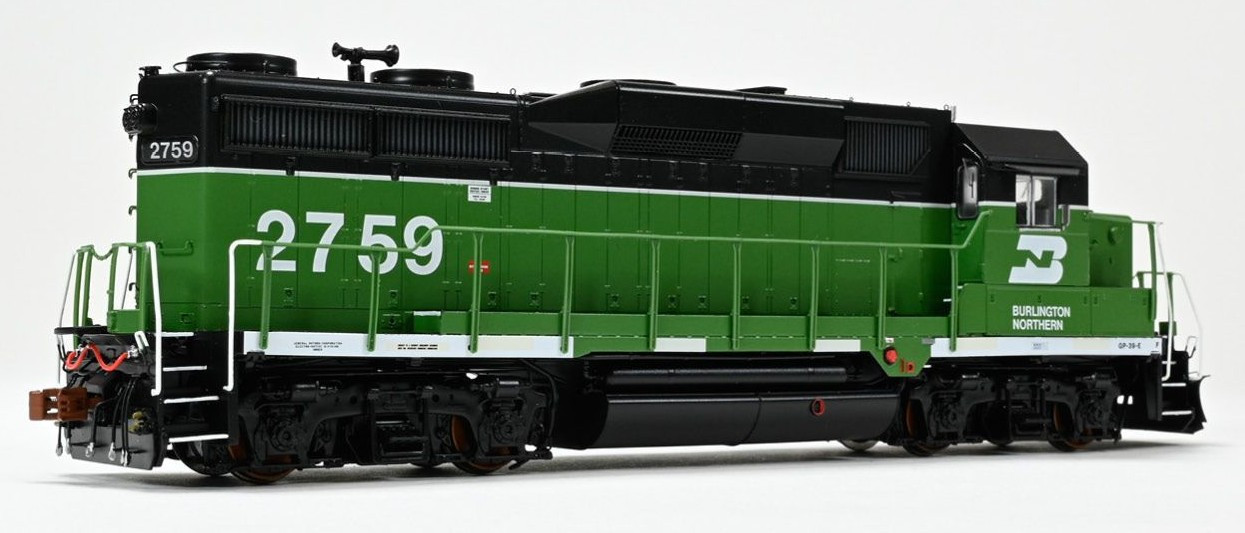
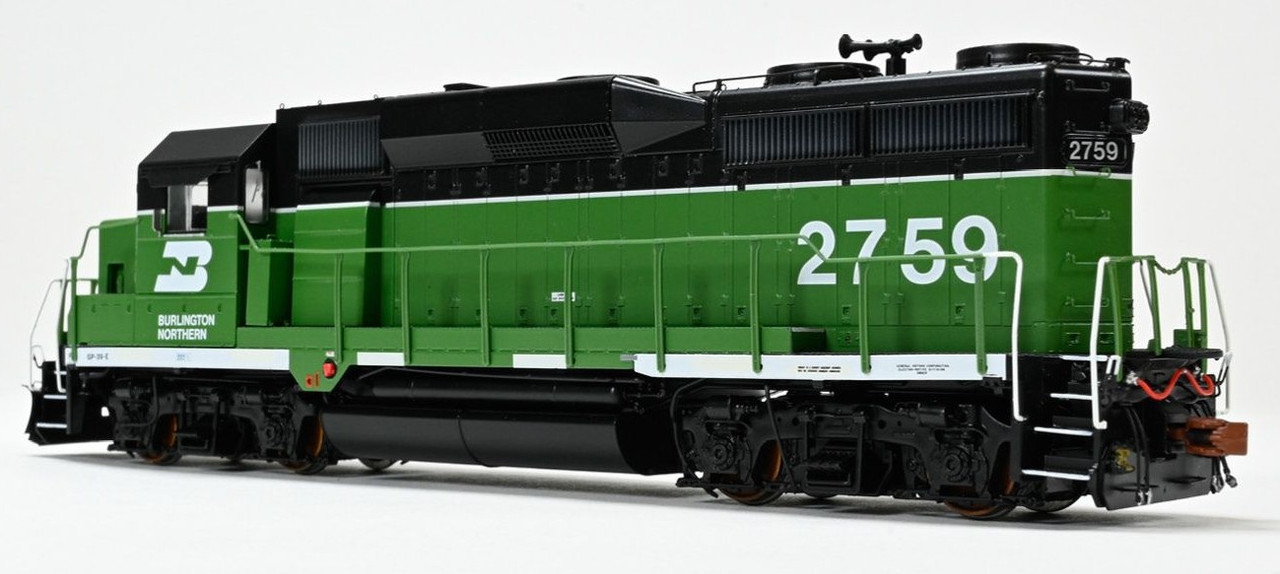
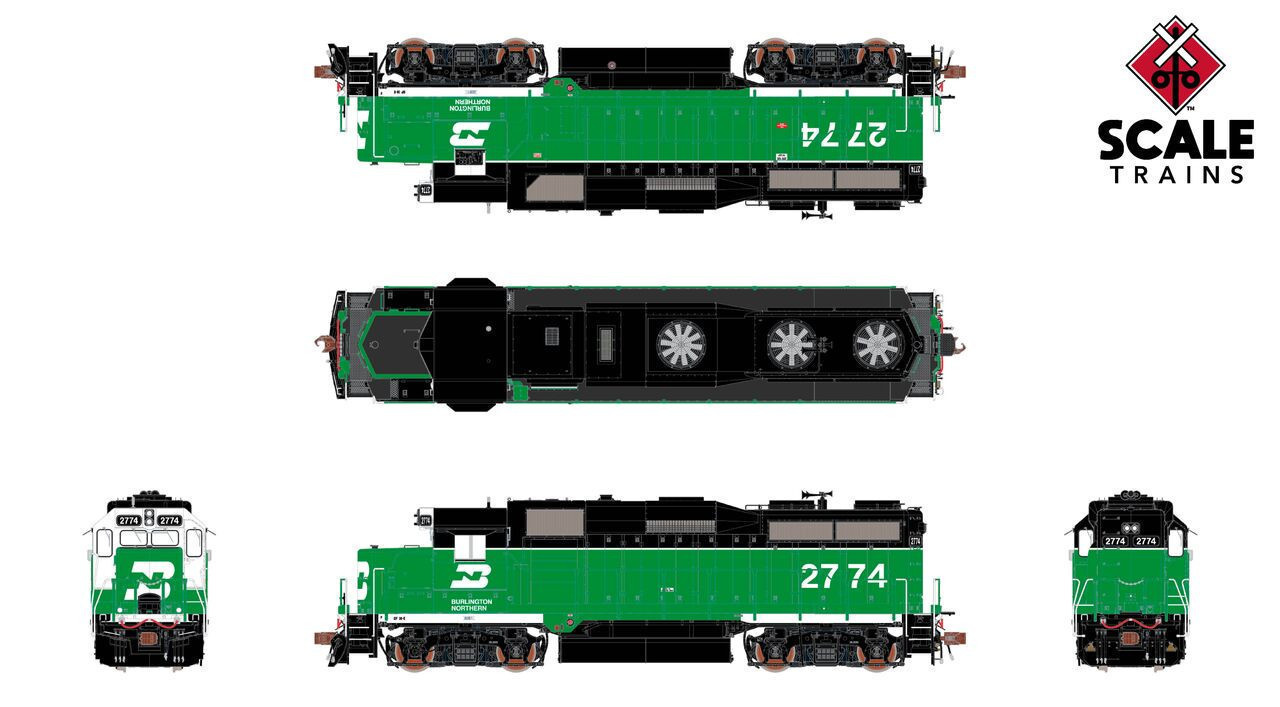
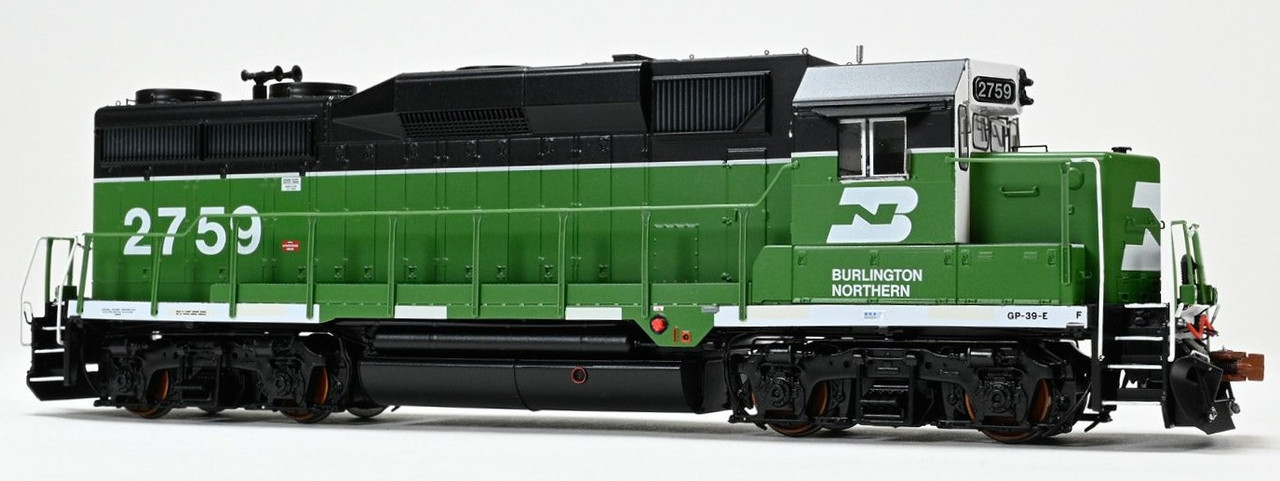
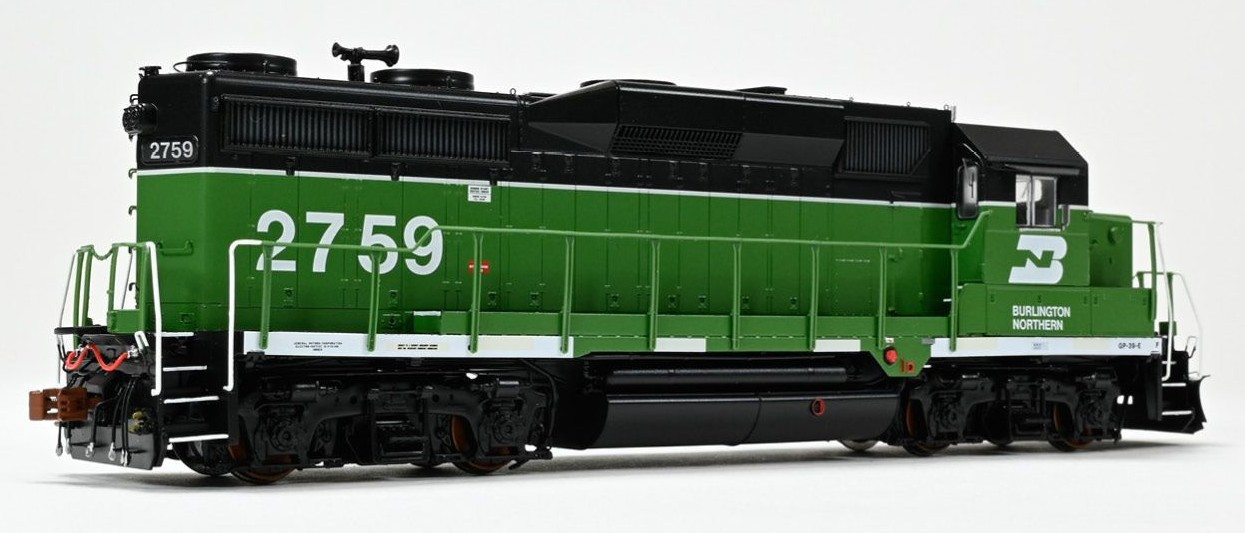
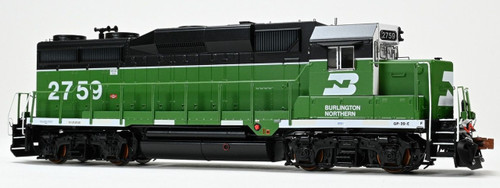
ScaleTrains Rivet Counter HO SXT40940 DCC Ready EMD GP39E Burlington Northern/White Face/Strobe Lights BN #2774
- In Stock:
- 1
- Scale:
- HO
- SKU:
- SXT40940
Description
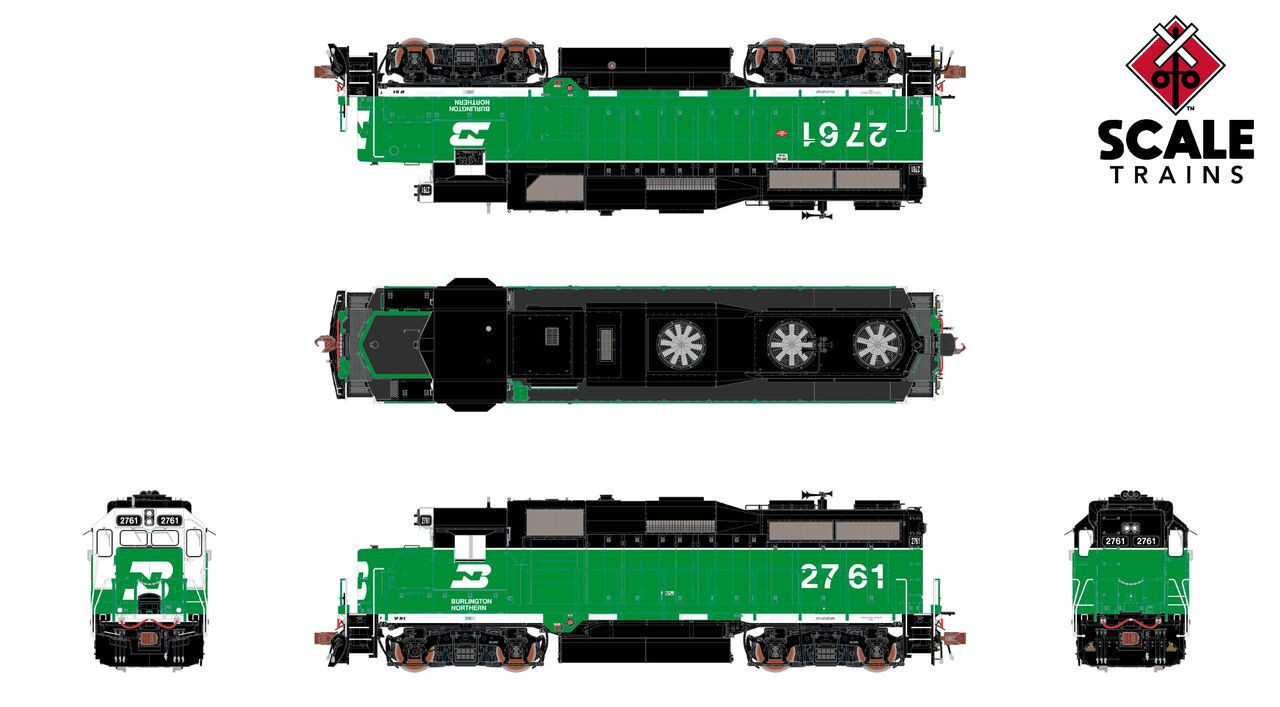
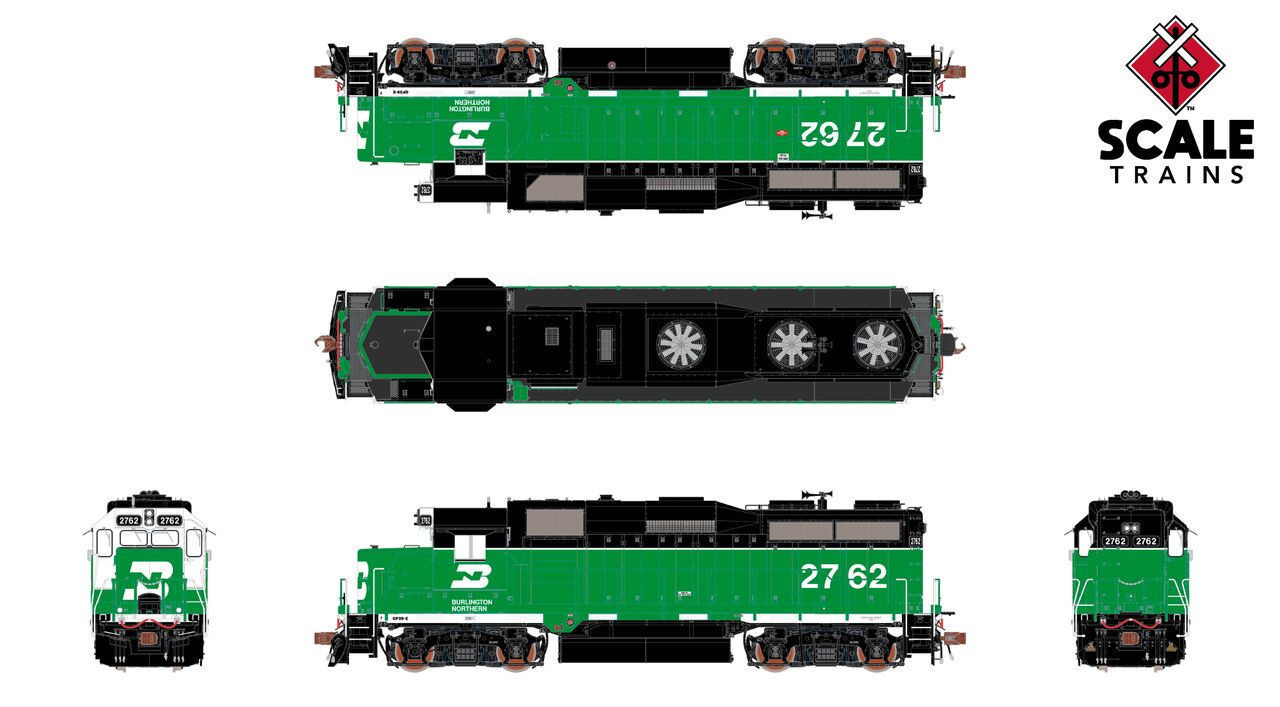
Please note picture is representative of the item but may not be same road number. Always refer to product description for actual product details.
ScaleTrains Rivet Counter HO SXT40940 DCC Ready EMD GP39E
Burlington Northern/White Face/Strobe Lights BN #2774

Road Number Specific ScaleTrains
- New roadname
- New paint scheme
- Era: 1991 to Mid-90s
- Series BN 2759-2778; Rebuilt October-December 1991
- Road numbers 2759, 2761, 2762, 2768, 2773, and 2774
- Fully-assembled
- LED-illuminated ground lights on both sides of locomotive*
- LED-illuminated “hemisphere” walkway lights on hood rear end and at end of raised walkway duct; EMD slot-style lights on front short hood end*
- LED-illuminated front deck-mounted Quantum Q2000 crossing strobes
- Blanked front and rear class lights
- LED-illuminated, printed and backlit cab and long hood end number boards
- Front EMD low plow with MU hose openings and wire form grab irons; rear multiple unit (MU) hose catch boxes
- 3-hose multiple unit (MU) hose clusters with silver gladhands
- Semi-scale coupler buffer equipped with durable metal semi-scale Type E knuckle couplers
- Front and rear straight uncoupling levers with loop handles; two inner and two outer mounting brackets
- Modified pilot faces with uncoupling lever loop notches
- Pilot face mounted dummy multiple unit (MU) receptacles with cable
- Handrail set with center gangway chains
- Front and rear standard drop steps
- Scale sectioned treadplate detail with EMD early “X” style pattern
- 81” EMD “Spartan” type replacement short hood with ratchet handbrake
- Hinged battery box doors with late “lift-off” hinges and narrow louvers
- Replacement cab sub-base doors with lift-off hinges
- Front standard EMD LED-illuminated headlight with lenses on number board housing
- Replacement Dash-2 cab with welded side window panels and standard armrests
- Detailed cab interior with separate floor, rear wall, seats, and standard AAR control stand
- No cab vents
- Sliding cab side windows
- Small mirrors mounted fore of cab side windows on both sides of cab
- Standard EMD sunshades with long sunshade tracks
- Lost-wax brass cast Leslie RS-3-L horn with clearance bracket mounted on long hood behind #1 radiator fan
- Motorola ASP-16 “Firecracker” antenna mounted on the cab roof
- Accurate hood door and long hood detail
- Retrofitted “stand-off” Dash-2 style ECAFB
- Rebuilt Dash-2 style inertial compartment with ribbed blower housing
- Dash-2 style inertial intake grills with top and bottom drip rail
- Tall turbo exhaust stack
- Standard-range dynamic brakes with 48” fan
- Late See-through dynamic brake intake grills with horizontal wires through vertical vanes
- Dash-2 style corrugated radiator intake grills
- See-through front and rear 48” radiator fan housings with 8-blade fans; blanked center radiator fan
- Curved radiator fan grab iron
- Round sand fill cap on top of long hood end
- Rear LED-illuminated horizontal headlight with lenses
- Underbody frame rail with separate plumbing
- Detailed Blomberg-B trucks with Hyatt bearing housings; elliptical springs; end transom detail; separate sanding lines and brackets; and separate swing hanger detail
- Dimensionally accurate truck centers
- Aeroquip speed recorder mounted to #1 axle on left front truck sideframe
- Spare knuckle holders mounted on rear pilot face
- Frame-mounted steel bell
- Salem air filter (accordion style)
- 2,600-gallon fuel tank with dual staggered vertical gauges and fuel fill in sill skirt; round gauges in fuel tank right side
- Factory-applied wire grab irons, photoetched lift rings, windshield wipers, trainline hoses with silver gladhands, air tanks, sand hatch covers and more
- Motor with 5-pole skew wound armature
- Dual flywheels
- All-wheel drive
- All-wheel electrical pick-up
- Directional LED-illuminated headlights
- Printing and lettering legible even under magnification
- Operates on Code 70, 83, and 100 rail
- Packaging safely stores model
- Minimum radius: 18”
- Recommended radius: 22”
DCC & sound equipped locomotives also feature:****
- ESU LokSound 5 DCC & Sound decoder with “Full Throttle”
- Two (2) cube-type speakers
- Turbocharged 16-645D3A prime mover sound
- ESU designed “PowerPack” with two super capacitors***
- Operates on both DC and DCC layouts****
DC/DCC & sound-ready locomotives also feature:****
- Operable on DC layouts****
- DCC-ready with 21-pin connector
* Lighting features operate when using an ESU decoder with appropriate programming while operating using DCC
** Class lights illuminate in white color only in DC operation. Access and changing colors requires an ESU decoder with appropriate programming while operating using DCC
***“PowerPack” feature only compatible with appropriately programmed ESU decoders operating on a DCC layout
****Lombard Hobbies Recommendation - As modelers ourselves we highly recommend ONLY running DCC on DCC systems and DC on DC systems, regardless of 'Dual-Mode' capability. This gives optimum performance and safeguards the unit from possible damage from running on a different system than originally intended and from any inexperienced operator errors.
Prototype History:
First introduced in 1961, the GP30 would become one of the most common locomotives on the rails for the next two decades.
The demo unit, numbered 5629, quickly set out to prove its capabilities and features to the railroads. But before long, EMD would re-designate its new general-purpose unit the “GP30”, mainly as a marketing move, the rationale being the model number “30” being greater than the “25” of the competition. They would also tout “30” design features and improvements over previous models. This change, along with a return trip to LaGrange for a new demonstrator paint scheme and some styling tweaks to the carbody that would give it the definitive GP30 “look”, would set the stage for the GP30’s arrival on the railroad scene.
The GP30 would prove to be a winner for EMD, outselling the upstart U25B nearly 2:1, with examples being sold to most major railroads of the era by the time production ended in 1963. The largest original GP30 owner was Union Pacific, acquiring a total of 112 standard GP30s, and 40 cabless GP30Bs, the only owner of that type. These cabless units came in two distinct groups; standard GP30Bs intended as freight booster units, and steam-generator equipped GP30Bs meant for passenger duty, typically trailing behind SDP35s on secondary trains, such as troop trains of servicemen embarking to the conflict brewing in Southeast Asia in the mid-1960s. Taking second place for largest new GP30 owners was Southern Railway, acquiring 120 examples, and continuing with their longtime practice, came equipped with EMDs optional high short hood. Norfolk & Western would be the only other purchaser of GP30s with this option, with all other owners preferring the standard low short hood and cab-front operational configuration for improved visibility.
Finally, some of the most distinctive GP30s were to be found on the Burlington Northern. They had a sizable fleet of units inherited from merger partners Great Northern and the Chicago, Burlington & Quincy, and found GP30s useful for many intermediate chores. So much so, in 1990 they embarked on an ambitious rebuild program that would rebuild most of their fleet, as well as used GP30s (and GP35s) acquired from across the country. Three different vendors — VMV Enterprises, EMD, and Morrison-Knudsen — were contracted for the program, with the resulting product designated as a GP39, with a suffix added at the end to denote who did the work; GP39E for EMD, GP39M for Morrison-Knudsen, and GP39V for VMV.
These medium-HP rebuilds were brand-new for all intents and purposes, with the prime movers upgraded to 2,300hp 16-645 specs, an AR10 alternator replacing the original D32 generator, and a new Dash-2 electrical control cabinet replacing the troublesome original. While the GP30s rebuilt by VMV and M-K kept their signature GP30 appearance, a group of former Southern high-hood units would have the entire cab and nose assembly replaced with a newly fabricated EMD “Spartan” style cab and low hood, whose dimensions and utilitarian appearance clashed with the graceful curves and “humpback” of the GP30 carbody. Appearances notwithstanding, these rebuilds were a success, providing BN with needed medium-HP units suitable for a variety of assignments, with many remaining in service to this day with successor BNSF.
Lombard Hobbies - Your #1 Largest Authorized ScaleTrains Select Retailer!
0 Reviews Hide Reviews Show Reviews
Related Products


ScaleTrains HO
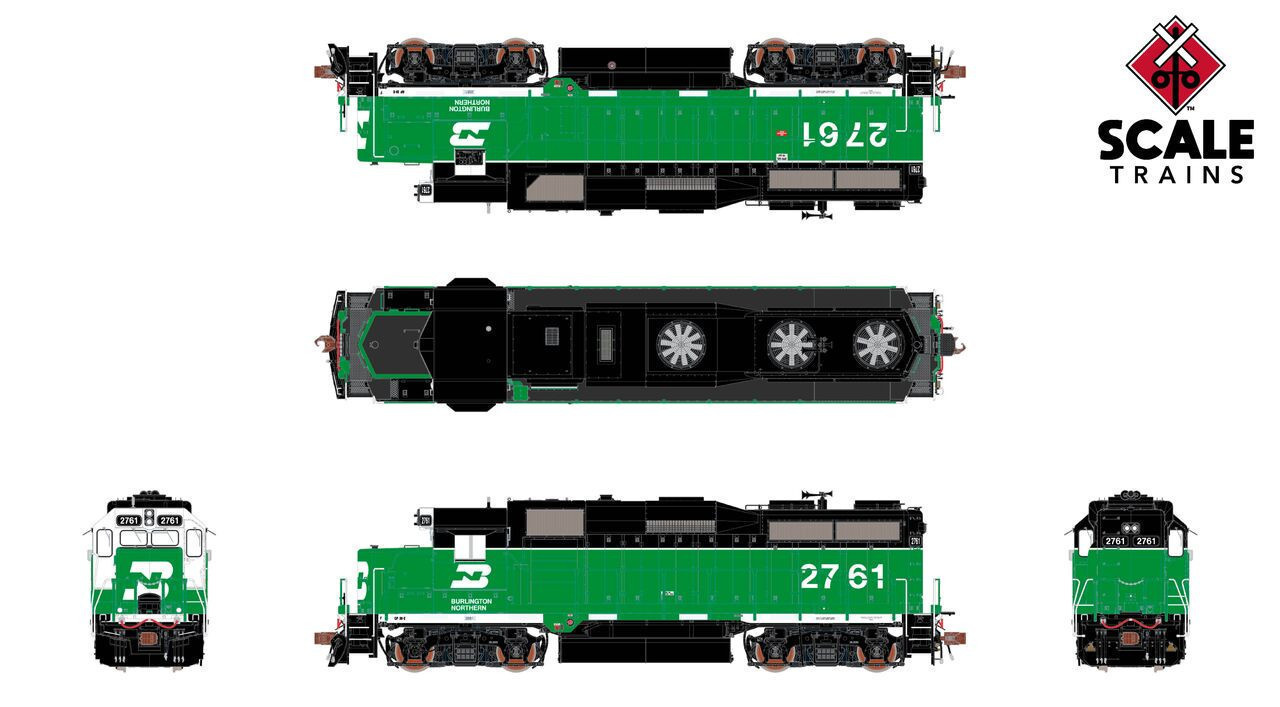
ScaleTrains Rivet Counter HO SXT40932 DCC Ready EMD GP39E Burlington Northern/White Face/Strobe Lights BN #2761
Please note picture is representative of the item but may not be same road number. Always refer to product description for actual product details. ScaleTrains


ScaleTrains HO
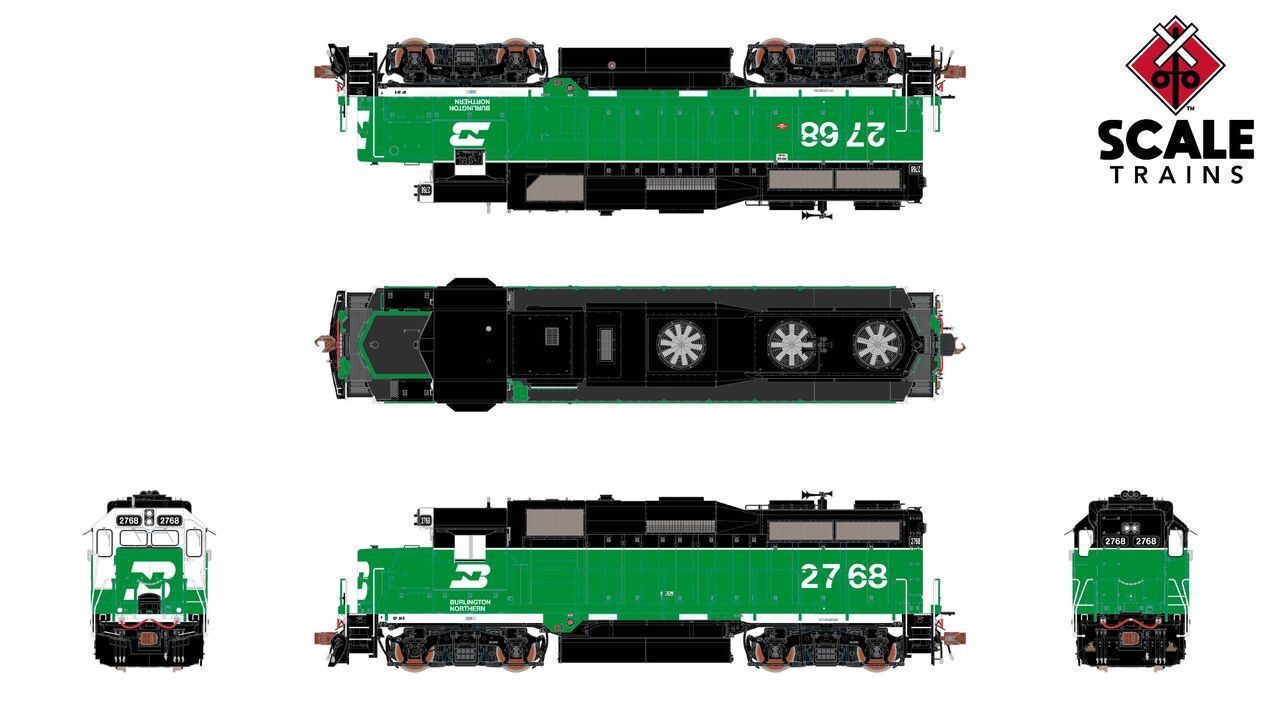
ScaleTrains Rivet Counter HO SXT40936 DCC Ready EMD GP39E Burlington Northern/White Face/Strobe Lights BN #2768
Please note picture is representative of the item but may not be same road number. Always refer to product description for actual product details. ScaleTrains
ScaleTrains N
ScaleTrains Rivet Counter N SXT33788 DCC Ready EMD SD40-2 Locomotive Burlington Northern BN #7048
Please note picture is representative of the item but may not be same road number. Always refer to product description for actual product details.

ScaleTrains N
ScaleTrains Rivet Counter N SXT33784 DCC Ready EMD SD40-2 Locomotive Burlington Northern BN #7035
Please note picture is representative of the item but may not be same road number. Always refer to product description for actual product details.